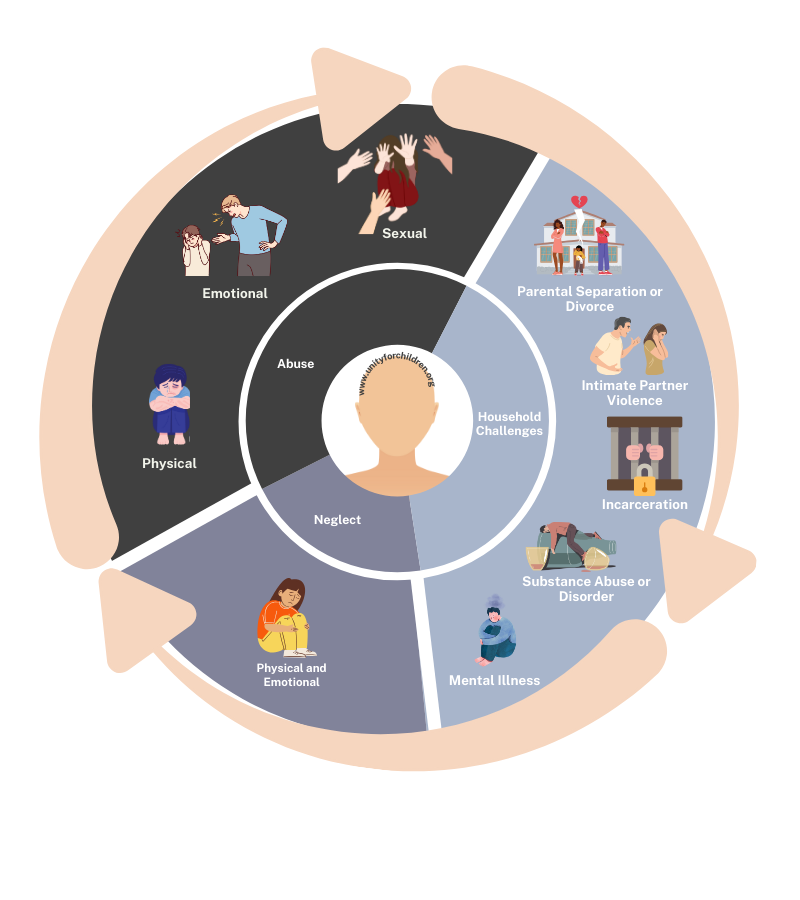
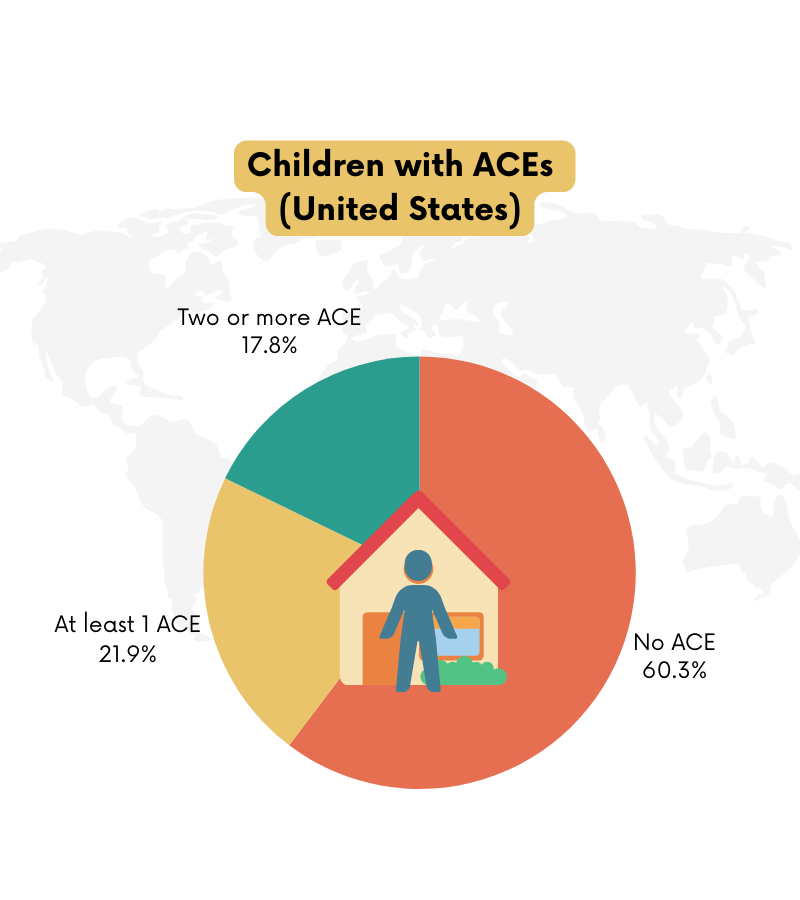
Research shows that many children in the United States experience adverse events during childhood, which may include neglect, exposure to substance use, mental health challenges in the household, and other forms of trauma. These experiences are referred to as Adverse Childhood Experiences (ACEs).
Although trauma can occur at any age, it has especially profound and lasting effects on children’s developing brains. These experiences are widespread and affect children across all sectors of society.
Let’s start with the basics…
Why is The Healing First Initiative Needed?
Status quo costs a staggering amount annually and results in preventable fatalities, it is time to move from an approach that compounds harm to one that prioritizes healing.
15.5%
~40%
have 2+ ACEs (High Risk)
of Illinois children have 1+ ACE
28.5%
~60%
have 4+ ACEs (Severe Risk)
of Illinois adults have 1+ ACE

238,169
Total cases associated with abuse or neglect (FY25)
117,323
Calls to Central State Registry (FY25)

-
CAPABILITY GAP
58.2%
unfamiliar with the core science of trauma.
at least somewhat familiar with institutional trauma.
74.5%
not trained or unsure of being trained on historical trauma.
59.8%
15.4%
currently conduct ACEs screening for early detection.
feel they don’t have adequate resources to treat trauma.
73.7%
of new investigators have ≤ 1 year of experience.
46.9%
ACE stands for adverse childhood experience.
Almost all training facilitators reported receiving no formal training to conduct individual or group debriefings.
registered staff missed medical training due to investigative activities.
43%
CHILDREN IN LIMBO
children faced a second incident of substantiated abuse within a single year.
1 IN 7
of total child deaths had unfounded findings from prior investigation - higher than historical average.
32%
likelihood that a child placed in the care system will have moved 3 or more times.
72.8%
ECONOMIC COST
annual cost to economy of the United States, or approximately 1% of the GDP of the United States (with just one year of confirmed cases of child maltreatment).
$124 B
Sources: IDPH, Special Emphasis Report: ACEs (2023); ICJIA, Violence Prevention Needs Assessment; IL DCFS, Executive Statistical Summaries (2025); Prevent Child Abuse Illinois, ACEs Environmental Scan; Gelles and Perlman/Prevent Child Abuse America, Estimated Annual Cost of Child Abuse and Neglect (April 2012); UIUC Children and Family Research Center, CPTA Evaluation (2025); DCFS Office of Inspector General, FY24 Annual Report; U.S. HHS, Child Welfare Outcomes Data Site.

Our Approach for Lasting Impact
Our movement is here to challenge the conventional approach in child welfare through collective action and a shared vision to create real, lasting change for children affected by parental substance abuse, domestic violence, and neglect.
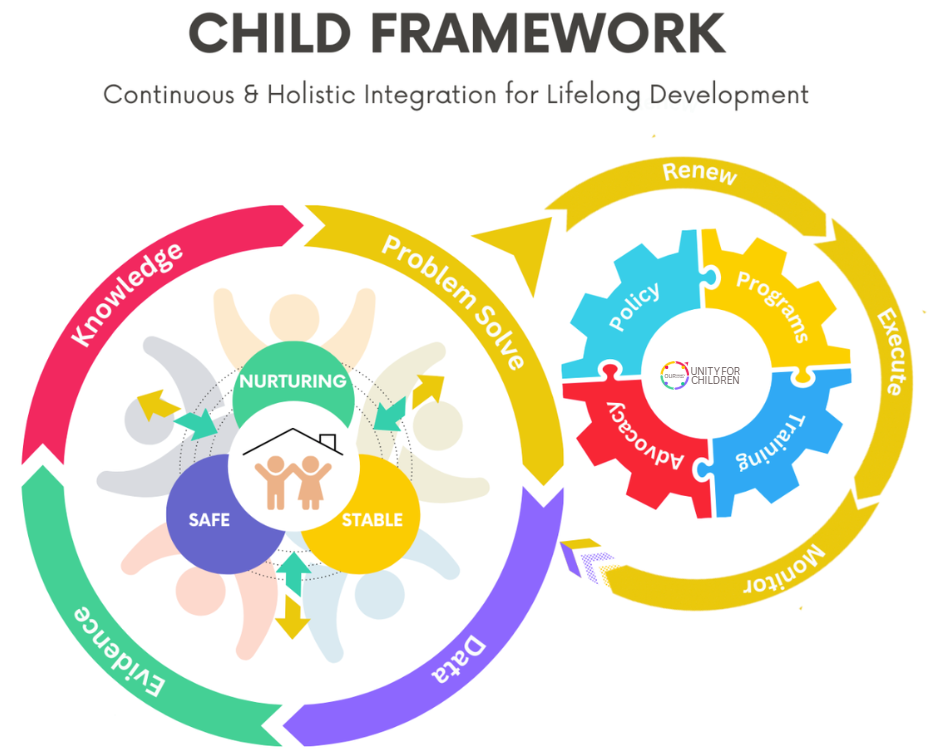
Our CHILD Framework integrates continuous cycles of proactive decision-making and renewal, addressing root causes rather than relying on surface-level band-aid approach, to break intergenerational cycles of harm.
Building Safe, Stable, and Nurturing Environments for Children
At the core of our work is a commitment to ensuring that every child is supported in a safe, stable, and nurturing environment. We do this by cultivating unified systems that heal—systems intentionally designed to break down silos, eliminate barriers, and bring together all sectors that impact a child's life. This includes—but extends beyond—policy, programs, training, and advocacy to create seamless coordination across education, health, justice, social services, and community supports. Our approach is holistic, evidence-based, and continuously evolving, particularly for children facing adversity, ensuring their needs are met in ways that are both responsive and enduring.
The Cyclical Nature of Our Approach
The strength of our framework lies in its cyclical nature. Our process is driven by two complementary cycles—Empowered Decision-Making and Continued Renewal —which work together to inform and refine the policies, programs, and practices we implement. Most importantly, this approach ensures that our solutions are grounded in real-world evidence and the lived experiences of children and families facing challenges. This continuous loop of learning, application, and refinement allows us to stay responsive to the evolving needs of children, ensuring sustainable solutions for long-term well-being.
By constantly learning, adapting, and advocating for families, we ensure that the solutions we provide are both effective and sustainable.
Join Us in Building Lasting Change
PROBONO
Offer your expertise and skills to champion the rights of children. Legal, research, and other professional services are invaluable in our mission to protect and nurture every child in every system.

PARTNERSHIP OPPORTUNITIES
Strengthen your company’s reputation and commitment to a collaborative and thriving culture. Directly impact the lives of Illinois’ children through program funding and partnership.

EMPLOYER MATCHING
Does your company have an employer matching policy? Through corporate matching, your employees can multiply your donation to Unity for Children.